
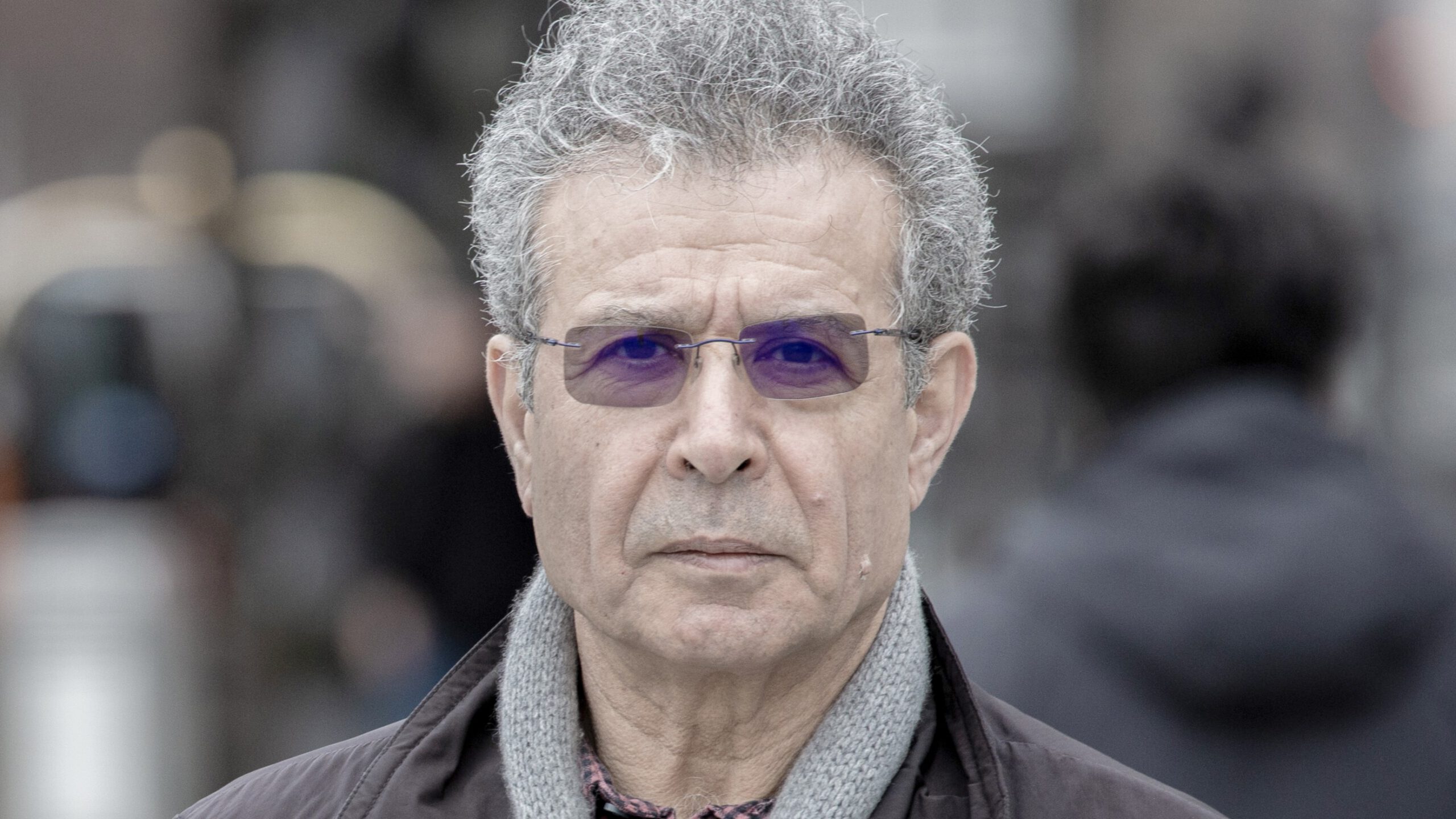
Nouri Al-Jarrah
Poet and and cultural editor Nouri al-Jarrah was born in Damascus in 1956. He first attracted attention with his collection of poems, The Boy, published in Beirut in 1982, which was followed by many more, including: Aligning with the Voice (London, 1988); Ode to a Voice (Cologne, 1990); Death’s Childhood (Casablanca, 1992); A Black Glass (London, 1993); Poem and Poem in the Mirror (Beirut, 1995); The Ascent of April (Beirut, 1996); Hamlet’s Gardens (Beirut, 2003); The Road to Damascus and The Persian Garden (Beirut, 2004); The Day of Cain (Haifa & Beirut, 2013); Noah’s Despair (Beirut, 2014); Abel’s Elegies (Beirut, 2015) and Four Elegies (Istanbul, 2016); Boat to Lesbos was translated into 9 languages. His works have been published in Beirut, Cairo, Algeria, London, Haifa, Nicosia and Istanbul, among others, with his most recent collection, La Serpiente de piedra, the Arabic edition published by al-Mutawassit Press (2022), and the English translation by Banipal Books (2022).
Nouri al-Jarrah is the exponent of a modernist project that was taking shape in the early 1990s when his poetry collections started being published. In these collections, he presents his vision of poetry and life, and carves out the unique poetic voice that he has fine-tuned over time. His poetry draws on diverse cultural sources, and is marked by a special focus on mythology, folk tales and legends. It reflects metaphysical features and deep existential visions.
His active engagement in establishing several cultural initiatives has contributed significantly to enriching his intellectual and aesthetic perspectives, not the mention the Arabic literary and poetry scene. Among the prominent literary magazines he has founded and managed are Al-Naqid (The Critic) 1988–1992; Al-Katiba (The Woman Writer) 1993–1995; Al-Rihla (The Journey) 1995–, and Al-Jadeed (The New) 2015–. Despite all being published in London due to the lack of freedom in Arab states, these magazines managed to have a profound impact on Arabic literature and poetry, while the manifestos and editorials he wrote for them have stirred lively debate on the values of innovation in poetry and literature and in life, those very values that he, along with a group of prominent contemporary Arab poets, have long been advocating.
On another note, Nouri al-Jarrah has also been influential in reviving the role of travel literature in Arab culture. In 2000, he and Mohammed Ahmed Al Suwaidi established The Centre for Arabic Geographical Literature, which administers the Ibn Battuta Prize for Travel Literature. During the past fifteen years, many Arab and foreign writers who work in this fascinating field have received the award. The centre is still running today, producing publications and hosting an annual conference. Selections from his poetry have been translated into a number of Asian and European languages, and his poetry collections have also been published in French, Spanish and Farsi.
The Boy
Beirut, 1982
Aligning with the Voice
London, 1988
Ode to a Voice
Cologne, 1990
Hamlet’s Gardens
Beirut, 2003
The Day of Cain
Haifa/ Beirut, 2013
Abel’s Elegies
Beirut, 2015
Four Elegies
Istanbul, 2016