

Worldwide readings and screenings
Worldwide Reading for Narges Mohammadi and Political Prisoners and in memory of those were killed in Iran on March 20 th 2026, Nowruz, Persian New Year
We call on libraries, bookstores, universities, schools, cultural and civil society institutions worldwide to participate in a worldwide reading. On January 8 and 9, 2026, Iranian security forces carried out a nationwide massacre of citizens who had taken to the streets to demand democracy and social justice. According to recent research by Time magazine, more than 30,000 people were killed. These figures are considered realistic not only by human rights organizations, but also by the German federal government and other Western governments. And it is to be feared that the actual number of victims is even higher, as there is virtually no news coming out of remote areas. This means that the suppression of the uprising is likely to be the world’s bloodiest massacre of demonstrators in such a short period of time.
Repression has also intensified through the judicial system. Iran remains among the countries with the highest number of executions worldwide; more than 1,000 executions were documented in 2025, and reports from early 2026 indicate that executions continue at a high rate, including cases linked to the recent protests. Since the establishment of the Islamic Republic in 1979, human rights organizations estimate that tens of thousands of people have been executed, including mass executions of political prisoners, most notably in 1988. Systematic repression since 1979 has included widespread imprisonment of political opponents, censorship, persecution of writers, journalists and artists, severe restrictions on women’s rights, and repeated violent crackdowns on protests.
Among those imprisoned is Nobel Peace Prize laureate Narges Mohammadi, journalist and human rights defender, who has been repeatedly arrested and sentenced over many years. In February 2026, she was sentenced to an additional seven and a half years in prison on charges of conspiracy. According to her lawyer, six years of this sentence relate to the accusation of “assembly and collusion to commit crimes.” The sentence further extends her imprisonment despite serious health concerns.
This worldwide reading aims to draw international public attention to the situation of political prisoners in Iran, to the systematic use of the death penalty, and to the victims of the violence of January 2026.
You’re free to choose texts for that. Our suggestions: works by writers murdered in the so-called “chain murders” of 1998, including Mohammad Mokhtari and Mohammad Jafar Pouyandeh, as well as political writings or letters by Dariush and Parvaneh Forouhar. As a central literary text: Hushang Golshiri, The King of the Black-Clad (published under the pseudonym Manouchehr Irani). Additional options include poems by Forugh Farrokhzad, Ahmad Shamlou, or Simin Behbahani, as well as letters or statements by Narges Mohammadi.
Optional film screening (with discussion): Mohammad Rasoulof, There Is No Evil (on the death penalty and individual responsibility) or The Seed of the Sacred Fig (on violence, fear, and loyalty under authoritarian rule).
Format: a public reading on a common date or within a defined period. The event may combine literary readings, a brief presentation of the current situation, and a discussion. After the event, participants are invited to share the place, date, names of contributors, and, if possible, a photo or short report to document worldwide participation.
If you would like to organise a reading, please write to us at: info@bebelplatz.org
Supporters include:
Martin Amanshauser (Austria)
Yuri Andrukhovych (Ukraine)
Verena Auffermann (Germany)
Ayo Ayoola-Amale (Nigeria)
Uziel Awret (Israel)
Mariela Baeva (Bulgaria)
Francisco Belard (Portugal)
Yahia Belaskri (Algeria/ France)
Vanni Bianconi (Switzerland)
Petr Blazek (Czech Republic)
Lilian Brøgger (Denmark)
Rafael Cardoso (Brazil/ Germany)
Amir Hassan Cheheltan (Iran)
Irene Dische (USA/ Germany)
José Manuel Fajardo (Spain/ Portugal)
Catalin Dorian Florescu (Romania/ Switzerland)
Jan Geurt Gaarlandt (Netherlands)
Anders Heger (Norway)
Nazanine Hozar (Iran/ Canada)
Lucina Kathmann (USA)
Navid Kermani (Germany)
Andrei Kurkov (Ukraine)
Laila Lalami (Morocco/ USA)
Liao Yiwu (China/ Germany)
Ulli Lust (Austria)
Chiara Macconi (Italy)
Bahiyyih Nakhjavani (Iran/ Uganda/ France)
Ramita Navai (Iran/ UK)
David Van Reybrouck (Belgium)
Philippe Sands (UK)
Radhika Santhanam-Martin (Australia)
Amir Or (Israel)
Preeta Samarasan (Malaysia/ USA)
Wolfgang Schiffer (Germany)
Eugene Schoulgin (Norway)
Daniela Sepehri (Iran/ Germany)
Wole Soyinka (Nigeria)
Gayatri Chakravorty Spivak (India/ USA)
Biljana Srbljanović (Serbia)
George Szirtes (Hungary/ UK)
Ko Ko Thett (Myanmar/ Finland)
Fariba Vafi (Iran/ Germany)
Haris Vlavianos (Greece)
Joseph Vogl (Germany)
Lyuba Yakimchuk (Ukraine)
Yan Lianke (China)
Yang Lian (China/ UK)
Lila Azam Zanganeh (France/ USA)
Juli Zeh (Germany)
Reading in Berlin
23.03.2026
19:00
Institute for Iranian Studies, FU Berlin
Auditorium -1.2009
Sara Maroufi is reading from Fereydoon had three Sons by Abbas Maroufi
Online reading in colaboration with the French PEN
20.03.2026
18:30 – 21:00 CET
Programme:
18:20 – 18:25: Carole Mesrobian
18:25 – 18:30: Ulrich Schreiber
18:30 – 18:35: Kiana Rahmani
18:35 – 18:40: Varujan Vosganian
18:40 – 18:45: Louise L Lambrichs
18:45 – 18:50: Shumona Shina
18:50 – 18:55: Diane Régimblad
19:00 – 19:05: Nora Atalla
19:05 – 19:10: Joëlle Thienard
19:10 – 19:15: Maria Mïlat
19:15 – 19:20: Sapphire
19:20 – 19:25: Yang Lian
19:25 – 19:30: Sabrina Bravi
19:35 – 19:40: Gaëlle Vatimbella
19:40 – 19:45: Sandro Veronesi
19:45 – 19:50: Pauline Michel
19:55 – 20:00: Michi Strausfeld
20:00 – 20:05: Dana Shishmanian
20:05 – 20:10: Sylvestre Clancier
20:10 – 20:15: Rashid Novaire
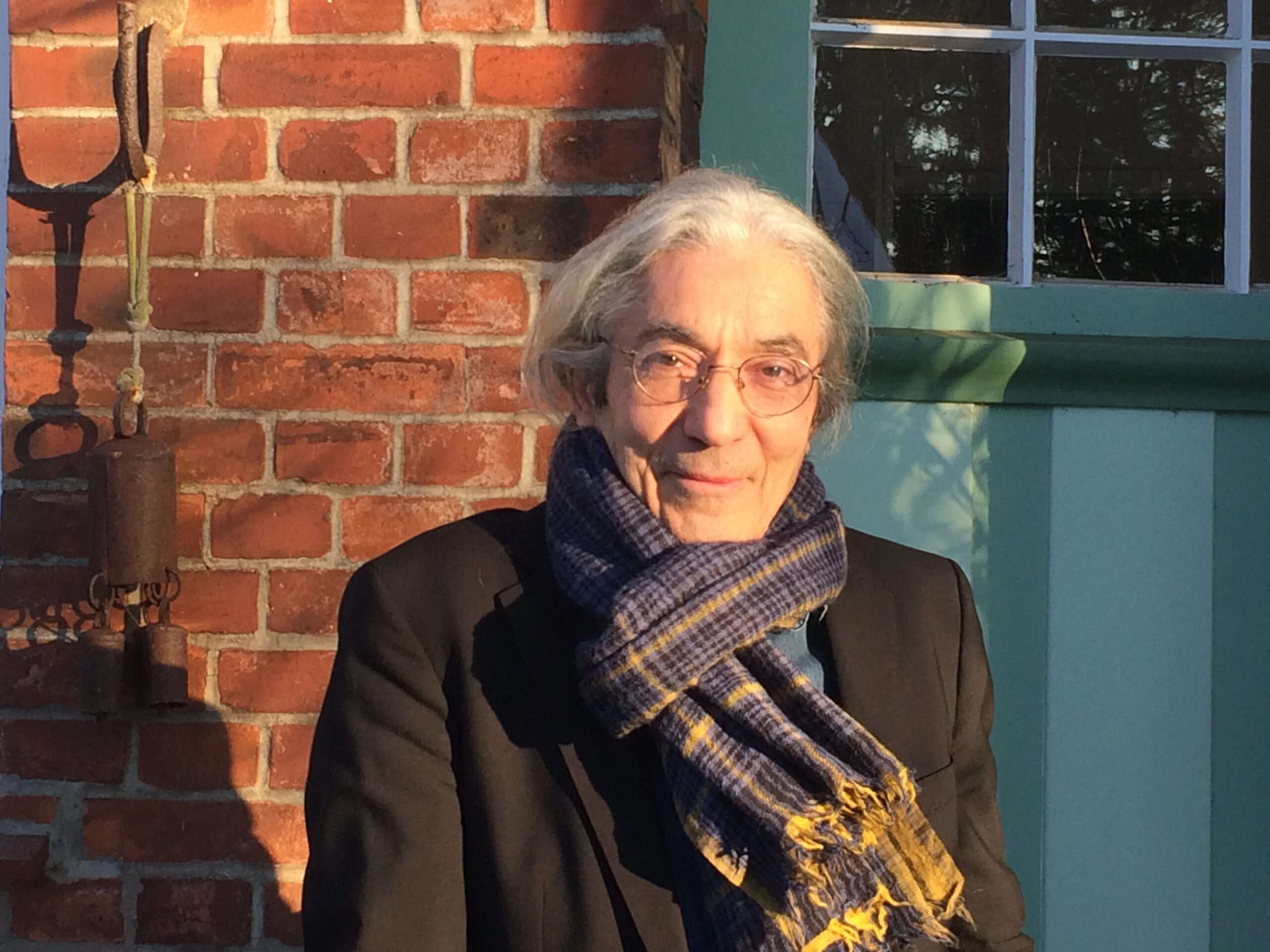
Call by the international literature festival odesa for a worldwide reading of texts by imprisoned Algerian author Boualem Sansal on 6 April 2025
The Algerian author Boualem Sansal was arrested at Algiers Airport on 16 November 2024 on his return from France. Since then, there have been neither official reasons for the arrest nor any charges against him. The state-controlled Algerian media has renounced his attitude towards political and religious developments in Algeria as well as his statements on geopolitical issues, such as the country’s western border with Morocco and the Western Sahara conflict. The 75-year-old author, who was awarded the Peace Prize of the German Book Trade in 2011, the Grand Prix du Roman de l’Académie Française in 2015, and the Prix Méditerranée in 2021 for his novel »Abraham ou La cinquième Alliance« (tr: Abraham, or The Fifth Alliance), among others, could be sentenced to several years in prison. His latest novel, »Vivre: Le compte à rebours« (2024; tr: Life: The Countdown) tells facets of Algeria’s history against the backdrop of a global dystopia. Sansal made his debut with »Le serment des barbares« (1999; tr: The Oath of the Barbarians), which was celebrated by the local press for its playful use of the French language.
In order to emphasise international solidarity with the author and the demand for his immediate release, the international literature festival odesa and the signatories below are calling for a worldwide reading of his texts. The goal is for Boualem’s texts to be read in public spaces, on public transport, in parks, as well as in schools, universities, and theatres. Participants in the worldwide reading can freely choose the texts to be read. We suggest novels and articles in which Sansal intervenes in public debate.
Individuals and institutions wishing to take part in a reading on 6 April 2025 are asked to send us the following information by 30 March at the latest: name of organiser, venue, time, participating readers, language of the event and, if applicable, a link to the website.
Despite his dismissal from the civil service in 2003 and the permanent observation that followed, the author lived with his family in Boumerdès, near Algiers. He published without the protection of a pseudonym and repeatedly intervened in current political debates. He continued to live in Algeria, even though his books were banned there at times, even though he repeatedly criticised the Algerian government and warned of the dangers of Islamism, and even though many of his colleagues had long since emigrated to Europe.
Supporters include:
Anthony Appiah (USA)
Sigrid Bousset (Belgium)
Brian Castro (Australia)
Jennifer Clement (USA/ Mexico)
John M. Coetzee (South Africa/ Australia)
Hemant Divate (India)
Andrei Kurkov (Ukraine)
Anthony Appiah (USA)
Carmen Boullosa (Mexico)
Stefan Hertmans (Belgium)
Judith Hermann (Germany)
Burghart Klaußner (Germany)
Jakub Maleki (Poland)
Marko Martin (Germany)
Paavo Matsin (Estonia)
Francesca Melandri (Italy/ Germany)
Kallia Papadaki (Greece)
Nii Ayikwei Parkes (Ghana)
David Van Reybrouck (Belgium)
Janne Teller (Denmark)
Jeroen Theunissen (Belgium)
Stephan Thome (Germany)
Ian Wedde (New Zealand)
Anna Weidenholzer (Austria)
Eliot Weinberger (USA)
Yang Lian (China/ UK)
Haris Vlavianos (Greece)
On 20 March 2006, on the occasion of the third anniversary of the beginning of the Iraq War, the Peter Weiss Foundation for Art and Politics (Peter-Weiss-Stiftung für Kunst und Politik e. V.) initiated the “Anniversary of the Political Lie” and the “Worldwide Readings.” Cultural institutions and interested individuals in cities around the world were invited to organize public readings.Since then, the “Worldwide Readings” have taken place once or twice a year and have addressed internationally relevant political issues such as the Charter 2008, as well as politically engaged figures including Edward Snowden, Anna Politkovskaya, and Mahmoud Darwish.
These events and activities are intended to foster a vigilant awareness of the content and forms of political communication. Details on past “Worldwide Readings” can be found on the website of the ilb. Bebelplatz e.V. has been organizing these worldwide readings and screenings since 2025.